The Dirty Litter Box Risk: How Cleanliness Affects Cat Urinary Health
A dirty litter box can lead to serious health problems. Learn the direct link between litter box hygiene and your cat's urinary health, plus essential cleaning protocols.
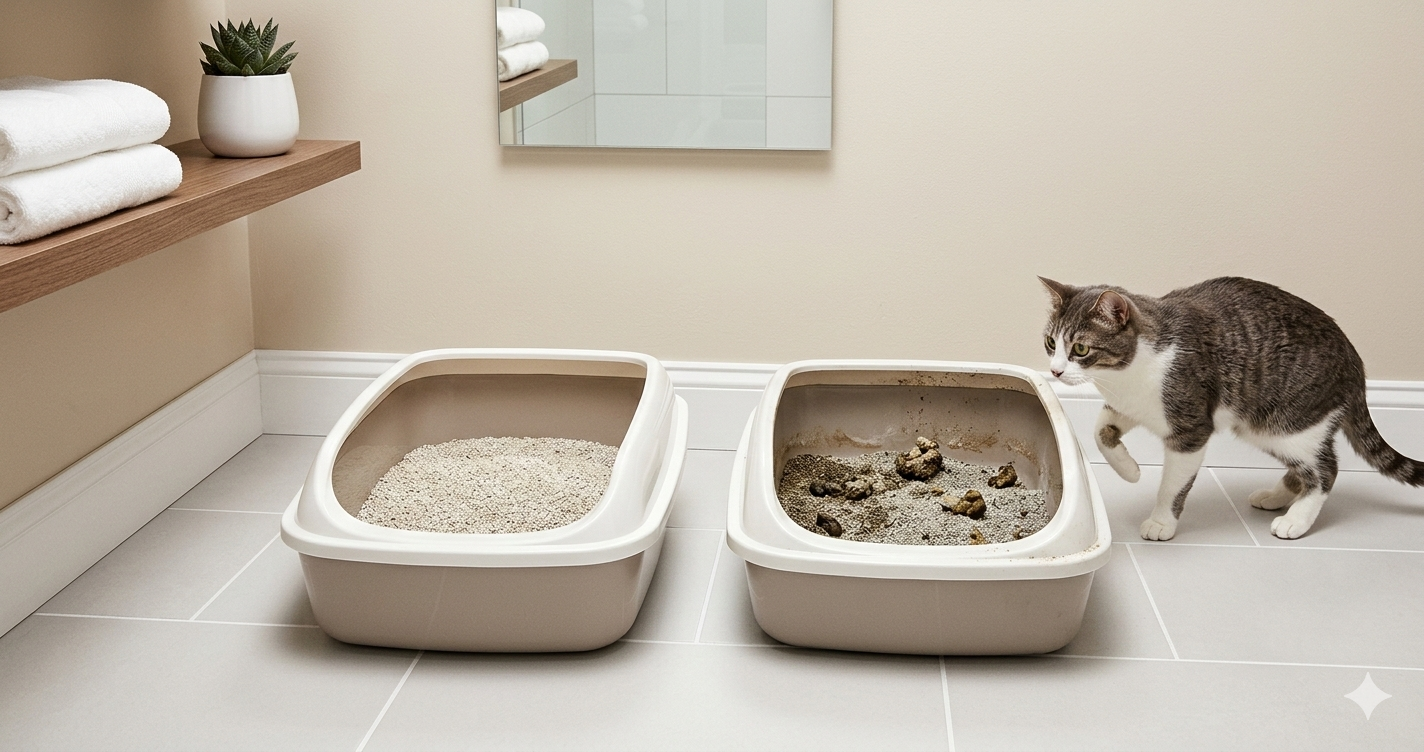
The state of your cat's litter box has a direct impact on their urinary health. Cats are fastidious animals, and a dirty litter box is a common cause of urine retention—where a cat holds its urine for extended periods.
The Danger of "Holding It In"
When a cat avoids a soiled litter box, several harmful processes begin:
- Urine Concentration: The longer urine sits in the bladder, the more concentrated it becomes. Highly concentrated urine is a perfect environment for crystals and stones to form.
- Bacterial Growth: Stagnant, concentrated urine can allow bacteria to multiply, increasing the risk of urinary tract infections (UTIs).
- Bladder Inflammation: The bladder wall can become irritated from holding large volumes of urine, which may contribute to feline idiopathic cystitis (FIC).
Simply put, a clean litter box encourages frequent urination, which helps flush the urinary tract and keeps urine dilute—key factors in preventing disease.
Essential Litter Box Hygiene Protocols
1. Establish a Strict Cleaning Routine
- Daily: Scoop all waste (urine clumps and feces) at least once per day. This is the non-negotiable minimum.
- Weekly: Completely empty the litter box, wash it with mild soap and warm water, and refill it with fresh litter. Avoid harsh chemical cleaners like bleach or ammonia, as the strong odors can repel cats.
2. Follow the "N+1" Rule for Multi-Cat Homes
The golden rule is to have one litter box per cat, plus one extra. This ensures there is always a clean option available and reduces territorial stress, which is a known trigger for urinary issues.
3. Choose the Right Litter
- Low Dust & Unscented: Dusty litters can irritate a cat's urinary tract and respiratory system. Strongly scented litters, designed for human noses, can be overwhelming and deter cats from using the box.
- Consistency Matters: Sudden changes in litter type can cause stress and avoidance. If you must switch, do it gradually by mixing the new litter with the old over 7-10 days. For cats with a history of FIC, consult your vet before changing litter.
Conclusion
Maintaining a pristine litter box is more than a chore—it's a vital preventative health measure. By ensuring your cat has a clean, accessible, and comfortable place to eliminate, you remove a major environmental trigger for urinary and kidney problems.
Related Reading:
- For a complete overview of symptoms and causes, read our Ultimate Guide to FLUTD.
- Learn how hydration works hand-in-hand with litter box habits in our Hydration Hacks guide.
PuraCatCare Team
PuraCatCare Team 的个人简介